Hair Shedding Is Not Always Hair Loss
More strands in the brush can feel alarming, especially when the bathroom light makes the scalp look a little more visible. Yet the loose hairs may be coming from normal shifts in the growth cycle rather than a permanent reduction in density. Shedding usually involves complete hairs released from the follicle, often with a small bulb at one end. Breakage is different: shorter pieces, uneven lengths, or frayed ends suggest the strand broke somewhere along its length.
The pattern matters as much as the amount. A temporary increase may follow stress, illness, major weight change, or disrupted nutrition, while gradual thinning often appears more consistently in particular areas. Hair can also look thinner when it is growing more slowly, becoming finer, or breaking near the scalp. These differences are not always easy to judge at home, and day-to-day shedding can vary enough to create confusion. A single wash or handful of strands rarely explains the whole change; the pattern over several weeks is usually more informative.
What May Be Driving the Change
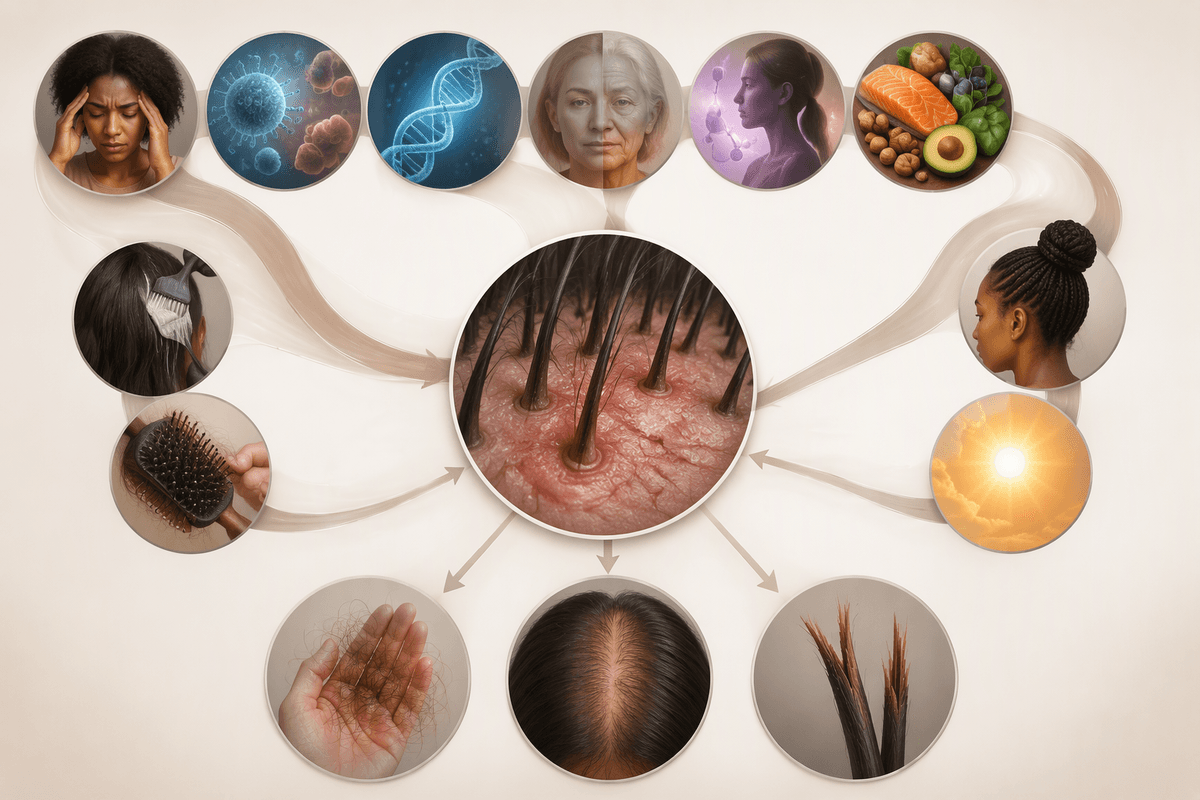
After noticing the pattern, it is easy to look for one clear cause, but hair changes often develop from several influences at once. A stressful period or recent illness may shift more hairs into the shedding phase, while genetics, age, or hormonal changes can gradually affect how densely hair grows. Nutrition may matter when intake is limited or weight changes quickly, although ordinary fluctuations do not automatically explain every loose strand. The timing can offer clues, but it is rarely conclusive on its own.
What happens to the hair shaft can add another layer of confusion. Tight styles, frequent heat, chemical processing, rough detangling, or sleeping on fragile hair may create breakage that resembles increased shedding. Scalp irritation can also make washing uncomfortable, leading someone to wash less often and then notice a larger amount of hair collected at once. In some situations, the visible change reflects slower growth, finer strands, or breakage rather than a sudden loss of follicles. Looking at distribution, strand length, scalp comfort, and whether the pattern continues is more useful than assigning blame to a single habit.
Why Growth Efforts Often Take Time
After changing a shampoo, taking a supplement, or handling hair more gently, the mirror may look unchanged for quite a while. That can feel discouraging, but hair does not respond like skin or muscle. A strand already in the growth cycle still needs time to lengthen, and a recently shed hair may not be replaced visibly for months. Even when a routine reduces breakage or supports a healthier scalp, the first improvement may be fewer short fragments rather than obvious new density.
Progress can also be difficult to judge because growth is uneven. Some areas may fill in gradually while surrounding hair remains fine, and new strands may be too short to blend with the rest. Supplements or products add further uncertainty when the underlying issue is unclear; more is not necessarily better, and changes may have little effect if nutrition was already adequate. Comparing photos taken under similar lighting and watching the pattern over several months can provide a steadier view than checking the mirror each day.
Daily Habits That Can Increase Breakage
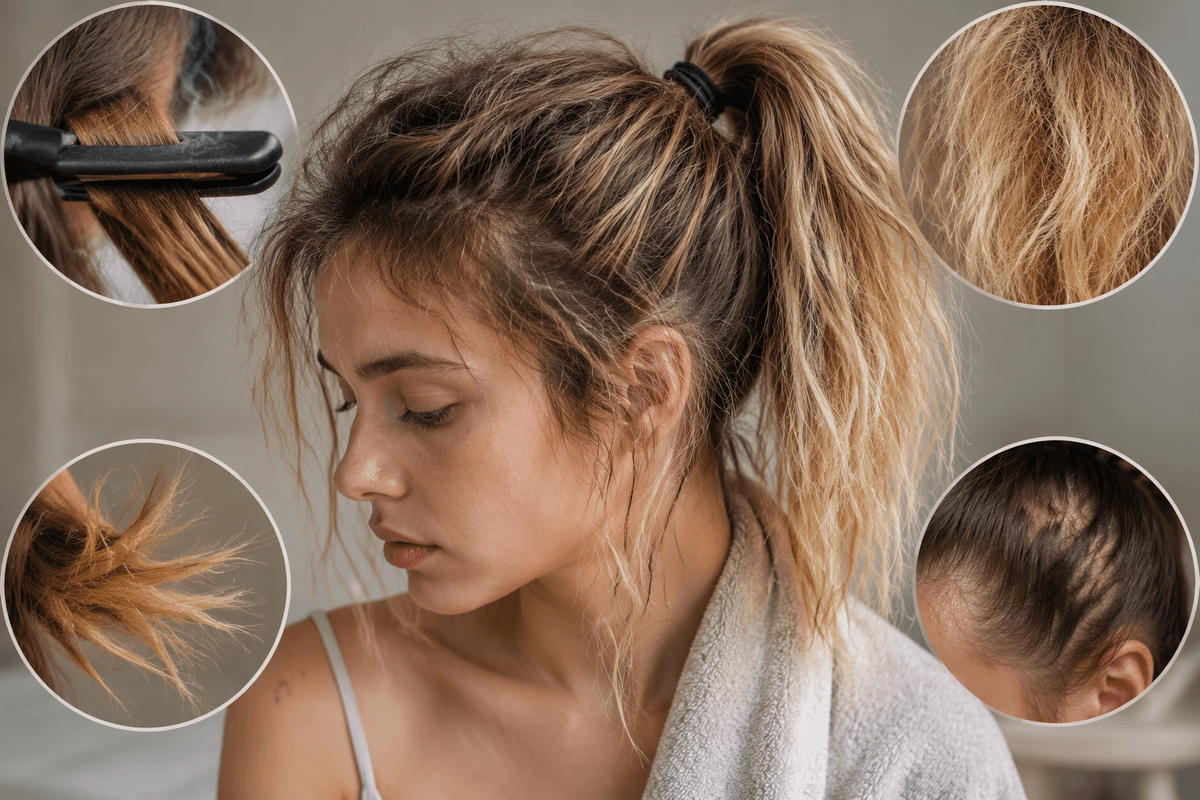
Sometimes the extra hair in the sink is not coming from the root at all. After repeated brushing, a hot tool, or a tight ponytail, the strands may be shorter than the surrounding hair and have uneven or split ends. Wet hair is especially easy to stretch and weaken, so rough towel drying or forceful detangling can leave small broken pieces that are mistaken for increased shedding. The effect may be gradual, making it difficult to connect the change with a routine repeated every day.
Heat, bleach, relaxers, and frequent coloring can reduce the hair shaft’s strength, while extensions or tightly secured styles may place ongoing tension near the scalp. This does not mean every styled routine will cause visible thinning, and hair texture affects how much damage becomes noticeable. Still, repeated stress can make density look lower because fewer strands remain at their full length. Checking whether the loose hairs are complete or broken, and noticing where the shortest pieces appear, can clarify what the routine may be contributing.
When Helpful Changes Create New Confusion
After noticing breakage, it can seem sensible to change everything at once: a gentler shampoo, less heat, a new supplement, looser hairstyles, and more frequent conditioning. The difficulty is that several changes can make the pattern harder to read. If shedding naturally fluctuates while a new routine is introduced, improvement or worsening may be wrongly attributed to one product. A supplement may also cause stomach discomfort or add unnecessary nutrients when the original diet was not the main concern.
Even helpful adjustments have limits. Gentler handling may reduce breakage without changing the rate at which new hair grows, while avoiding washing may simply allow more loose strands to appear together later. Product buildup, scalp sensitivity, or heavier conditioners can alter how full the hair looks without changing follicle activity. It is often more useful to make one practical change at a time and observe whether the hair feels less fragile, the scalp remains comfortable, or the pattern continues. That approach cannot remove all uncertainty, but it may prevent ordinary variation from becoming another source of alarm.
Choosing Between Observation and Evaluation
The urge to check again often appears when the part looks wider or more hair collects after washing. Observation can be reasonable when the change is mild, recent, and difficult to separate from breakage or normal fluctuation. Similar photos, notes about major stressors or illness, and attention to whether the scalp feels comfortable may reveal a clearer pattern than repeated mirror checks. Day-to-day comparisons remain unreliable, especially when lighting, hairstyle, or washing frequency changes.
Evaluation becomes more useful when thinning continues, appears concentrated in one area, or occurs with persistent scalp discomfort, marked scaling, sores, or sudden changes. It may also help when shedding follows a significant illness, weight change, medication change, or restricted eating pattern and does not settle over time. An appointment cannot always identify one simple explanation, and improvement may still take patience, but it can help separate shedding, breakage, and gradual density changes. Bringing a short record of timing, styling practices, symptoms, and changes in health or nutrition may make the discussion more specific without turning every loose strand into a warning sign.
A More Realistic Approach to Regrowth
Even with a clearer understanding of the pattern, regrowth may not mean returning quickly to an earlier density. The most realistic goal is often to protect the hair that is still growing, reduce avoidable breakage, and give the scalp consistent conditions over time. Gentle handling, less repeated tension or chemical stress, adequate nourishment, and attention to scalp comfort may help preserve appearance, but none can guarantee that new growth will occur. Results may also differ between areas, especially when strands have become finer or growth has gradually slowed.
Small changes can therefore matter without producing a dramatic before-and-after result. Fewer broken pieces, less scalp irritation, or a steadier part may be meaningful signs even when length and fullness change slowly. It is also possible for shedding to settle while density remains reduced, because replacement takes time and some causes are not fully reversible through routine changes alone. Watching the pattern with realistic expectations keeps ordinary fluctuations from becoming discouraging, while continued or concerning changes remain worth discussing with a qualified professional.