Poland’s best architecture isn’t in the obvious places
I realized it standing in Warsaw’s rebuilt Old Town: beautiful, yes, but also a reminder that Poland’s most interesting architecture often sits one train ride beyond the “must-do” circuit. The catch is that those detours only pay off if the city has real layers, not just one photogenic square.
The good news: Poland’s smaller and second-tier cities routinely punch above their size—Gothic cores, Hanseatic street grids, borderland mansions, factory modernism—often with fewer tour groups and more everyday street life. The friction is practical: timetables thin out at night, Sunday mornings can feel sleepy, and winter light flattens details unless you plan museum-heavy days.
This list isn’t about chasing “hidden gems.” It’s about choosing places where the built environment tells a clear story—and where two nights can feel worth the transfer, even on a 7–10 day schedule.
At-a-glance: six cities and their standout styles
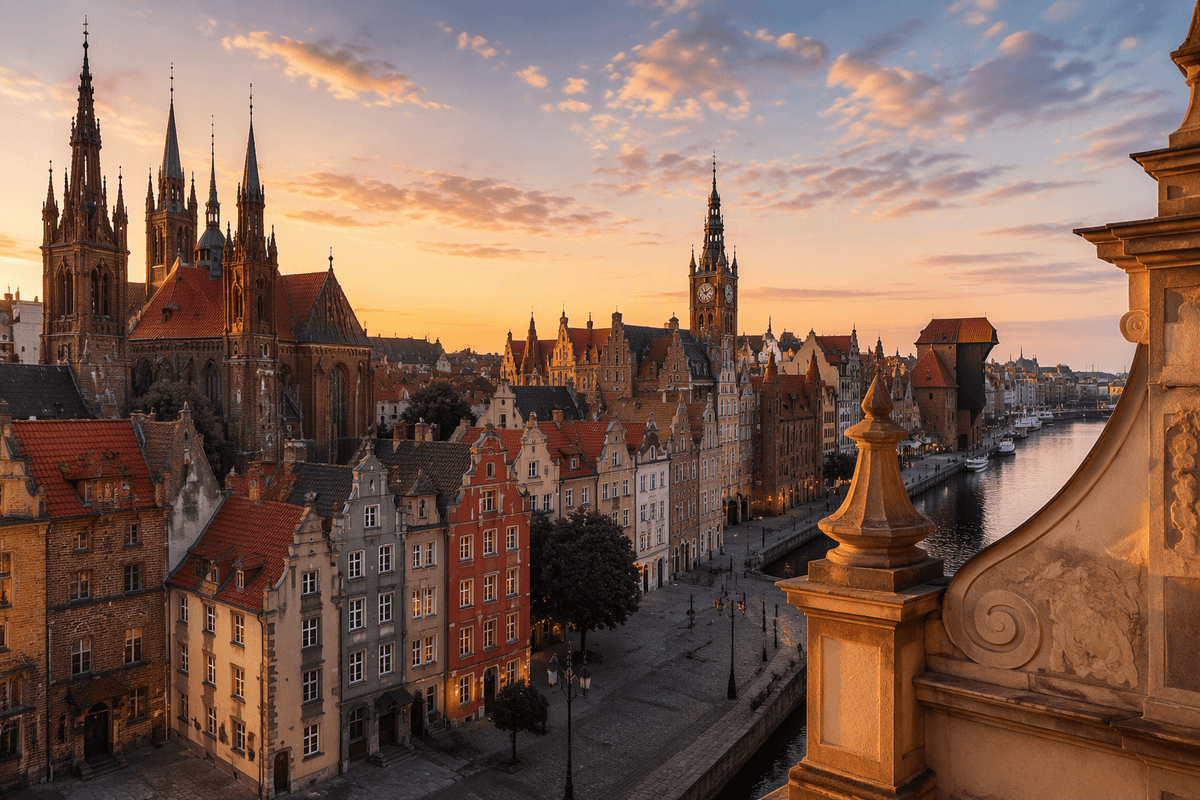
I ended up sorting the options by what I wanted to feel on the street, not what looked best in photos. Gdańsk is all Hanseatic confidence (but it’s the most “discovered”); Toruń compresses serious Gothic into an easy day-and-a-half (yet evenings can feel quiet fast).
Lublin delivers Renaissance-to-baroque layers and strong museum time with fewer tour buses, though winter can flatten the vibe; Przemyśl has Habsburg-era façades and borderland texture, but it’s a longer hop for a smaller payoff. Łódź is brick factories and Art Nouveau with nightlife that rewards two nights, while Katowice is modernism-to-contemporary adaptive reuse—best if you’re fine with “no cute old town” energy.
Gdańsk and Toruń: Hanseatic streets, Gothic cores
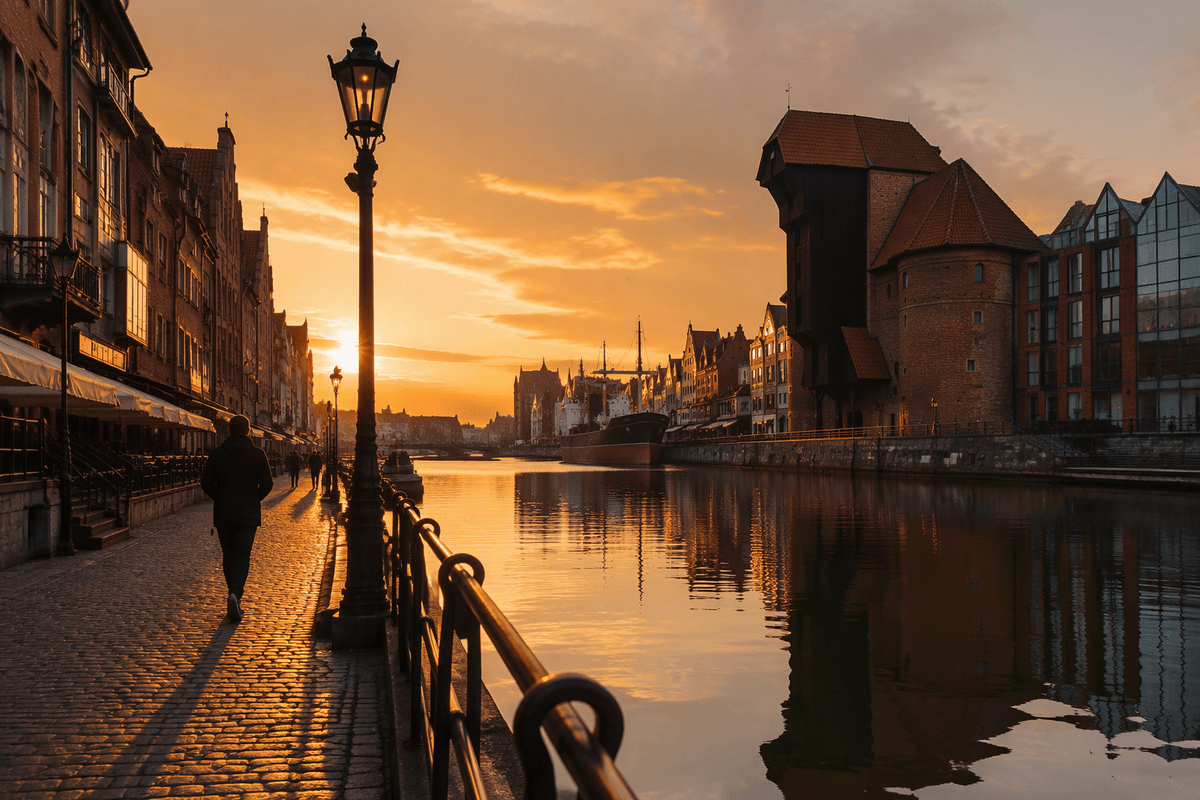
I hit Gdańsk early, before the day-trippers had fully “switched on” Długi Targ, and it finally made sense why it’s on every first-timer’s list: the street sequence is unusually coherent, and the big civic buildings read as mercantile power rather than just pretty façades. It works best if you treat it like a morning-and-evening city—golden-hour walks, then duck into interiors mid-day when the main route clogs (St. Mary’s and the waterfront cranes area both feel sharper once you’re not shuffling).
Toruń is the cleaner architectural edit: brick Gothic, tight scale, and an Old Town that’s easy to “finish” without trying. That’s also the limitation—if you arrive late afternoon, you can run out of momentum after dinner, especially outside summer.
For pacing, I’d give Gdańsk two nights if you want museums plus long walks; Toruń is a confident one-night or a long day trip, and it pairs efficiently on the Warsaw–Gdańsk corridor without turning transfers into the main event.
Lublin and Przemyśl: borderland layers, quiet grandeur
I arrived in Lublin expecting a “nice-but-small” stop and ended up walking slower than planned, because the architectural layers don’t announce themselves in one big postcard view—you keep turning corners and finding another era stacked on top of the last. The Old Town has enough Renaissance and baroque detail to reward an unhurried loop, but it works best when you add at least one interior or museum block to the day; otherwise you can burn through the prettiest streets quickly and wonder why you came. In shoulder season it’s ideal—fewer groups, more room to look—but in deep winter the same emptiness can feel like the city has gone flat after dark.
Przemyśl is the more niche choice: Habsburg-era façades, borderland mood, and a town plan that feels like it was designed for long, observational walks rather than checklists. It’s also where logistics start to matter—coming from Kraków or even Lublin, the transfer time is the price of admission, and the center is compact enough that one night can be “enough” unless you’re intentionally slowing down. If you’re choosing between the two, Lublin is the safer bet for cultural depth per hour; Przemyśl pays off most when you want quieter streets and don’t mind that the headline moments are subtler.
Łódź and Katowice: factories, modernism, creative revival
In Łódź, I learned quickly that your day goes better if you stop expecting a single “historic center” to organize everything. The most satisfying architecture here is linear: you stitch together factory complexes, Art Nouveau tenements, and renovated courtyards, and the city starts to read like a before-and-after study rather than a postcard. It’s rewarding on a mid-range budget because you can get a lot of visual payoff just by walking, but the distances (and occasional rough edges between blocks) mean you’ll feel it in your feet if you try to cram it into one long day. Two nights is where Łódź stops feeling like a detour and starts feeling like a place with its own evening rhythm.
Katowice is the cleaner, more modern counterpoint—less ornament, more composition: modernism, postwar fragments, and serious adaptive reuse. It works best if you’re interested in how cities reinvent themselves, not if you need “old town charm” to anchor your strolls. The catch is that the highlights can feel scattered, and the first hour can be underwhelming if you arrive expecting immediate beauty. Give it an afternoon-plus-evening, pair it efficiently with Kraków (it’s close enough to avoid a transfer day), and it becomes a strong palate-cleanser between more obvious stops.
How to plan: routes, pacing, and best seasons
The first routing decision is whether you’re building a north loop or an east–south line, because Poland rewards “along-the-rail” logic more than pinballing. From Warsaw, Toruń and Łódź slot in without drama; from there you can push north to Gdańsk or pivot east to Lublin. Trying to “collect” Gdańsk, Lublin, and Przemyśl in a tight 7 days is where the trip starts to feel like train platforms instead of streets.
Pacing-wise, two-night cities (Gdańsk, Łódź) keep you from doing architecture at a sprint; one-night stops (Toruń, Katowice) work when you arrive early enough to get an evening walk. For seasons, late spring and early fall hit the sweet spot for long walks and lighter crowds; July–August can be gorgeous but busier, while winter is workable for museums yet less forgiving for street-life cities like Lublin after dark.
Choosing your six: the trip that fits your tastes
On my last night of planning, the question that finally unclogged everything was: do you want “finished” beauty or “in-progress” cities? If you’re after coherent streets and obvious architectural payoff, build your six around Gdańsk + Toruń + Lublin, then choose either Łódź (industrial grandeur and nightlife, but spread out) or Katowice (modernism and reuse, but less immediate charm). That mix stays efficient from Warsaw and doesn’t force a heroic transfer day.
If you care most about quiet, layered places—and you’re okay with evenings that can go still outside summer—swap in Przemyśl as your “slow city,” but only if you’re already running an east–south line. Otherwise it’s the one that can feel “too small for the hours spent getting there.” The clean decision cue: keep two anchor bases (Warsaw and either Kraków or Gdańsk), limit yourself to one long hop, and you’ll spend your 7–10 days looking up at façades instead of down at timetables.