Why temple stays feel unfamiliar to first-timers
You pause over the booking form: does “Buddhist service” mean watching quietly, or knowing when to bow? That uncertainty can make a single night feel harder to plan than several days in Seoul. A temple stay brings visitors into Buddhist daily life, with activities that may include meditation, services and communal tasks—not simply accommodation beside a beautiful courtyard. The unfamiliar part is joining a rhythm you do not yet understand, especially when your usual travel instinct is to explore independently.
For a short stay near Seoul or Busan, treat the advertised program as your starting point, rather than assuming every temple offers the same experience. Activities differ, and dedicated programs for international visitors offer English guidance. Before booking, ask which sessions involve participation and whether instructions will be available in English. That small exchange helps distinguish a welcome stretch beyond your comfort zone from a stay spent guessing what happens next.
Roots of Korean Buddhism and temple life
The first bow makes more sense once you know Korean temple life grew out of Seon (Zen) Buddhism—less about debating beliefs, more about training attention through repetition. That’s why routines look “formal” even when they’re not meant to impress anyone. If you expect a museum-style visit, the early-morning rhythm can feel abrupt; if you want a reset, it clicks fast.
Most temples you’ll see near Seoul or Busan also carry layers of history—mountain monasteries built for quiet, rebuilt after wars, and still used as working communities. You’ll notice that monks and lay volunteers share the space, and your role is closer to “temporary resident” than “customer.” The limitation: English context can be minimal, so the meaning comes through gesture and pacing, not lectures.
In daily practice, etiquette is basically respect for the sangha (community) and the Buddha hall: shoes off, hands calm, voice low, and bows done because you’re entering a shared place of practice. Copying the person in front of you works surprisingly well—just avoid overcorrecting with big, showy bows or constant whispering questions when the room is quiet.
How a temple stay is structured
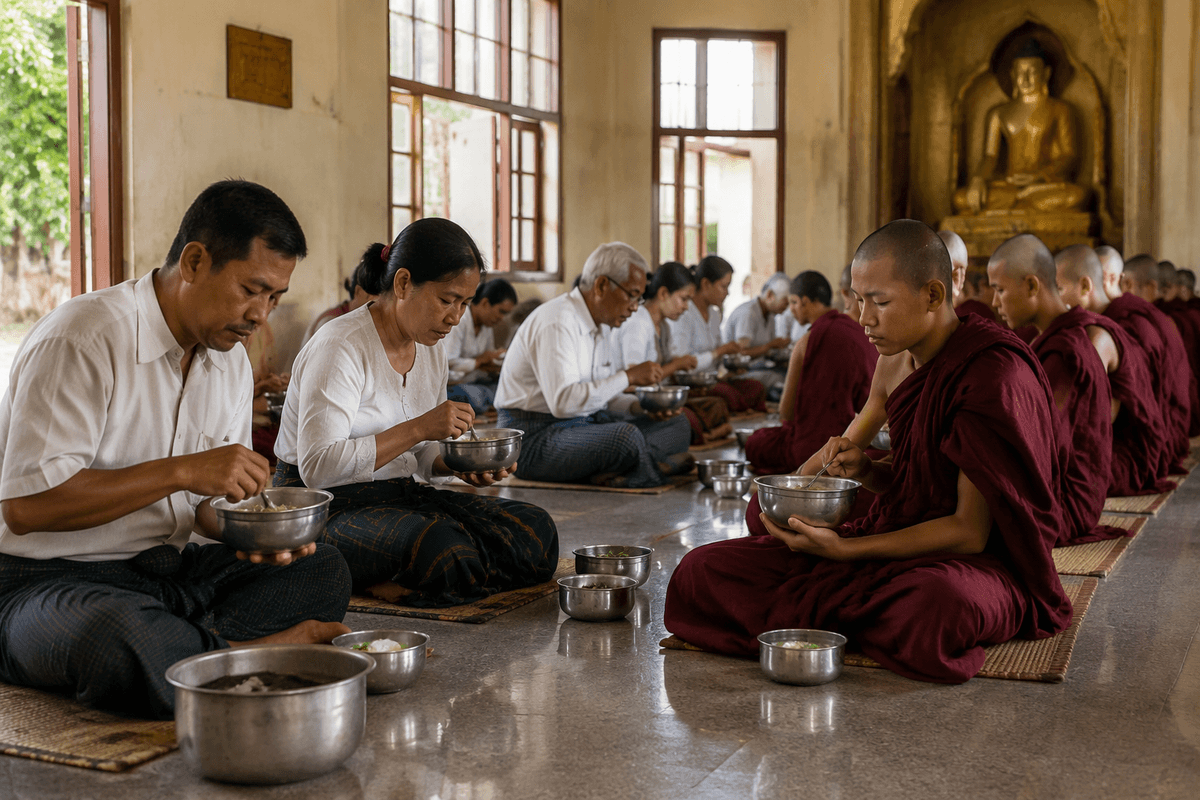
On my first check-in, the schedule sheet looked almost comically tight—until I realized it’s less “activities” and more a shared rhythm you borrow for a night. Most 1–2 night temple stays begin with orientation, a quick rundown of temple areas you can’t enter, and a few gestures you’ll use all weekend (how to bow, how to hold your hands, when to speak). It works best if you arrive before late afternoon; show up rushed or after dark and you’ll spend the first evening quietly playing catch-up.
From there, the structure is predictable but not always easy: early wake-up, a ceremony or chanting block, meals, and some combination of meditation (often brief for beginners), temple tour, and “work practice” like sweeping or tidying. Some temples add a formal tea time or a 108-prostration session—meaningful if you’re curious, exhausting if you’re jet-lagged or have knee issues. English guidance can range from step-by-step to a few key phrases, so it helps to treat uncertainty as part of the practice rather than a personal failure.
Nights are usually quiet and early. The simplicity lands well if you’re trying to reset your brain, but if you’re expecting downtime to explore nearby cities, the fixed timing can feel like it eats the whole trip—so plan your Seoul/Busan sightseeing either before you arrive or after you leave.
Etiquette basics: greetings, space, and silence
At orientation, I kept waiting for a big “rules” lecture, but what actually helped was watching how people moved: a half-step back to let someone pass, a small bow that wasn’t dramatic, and a quick pause at doorways. If you’re unsure, copy the most conservative behavior in the room—especially when greeting monastics. A simple bow (hands together or at your sides) is usually safer than reaching for a handshake, and it’s fine if you can’t match the depth perfectly; rushing and being loud reads worse than getting the angle “wrong.”
Space matters more than you think, and it’s where first-timers slip up. Most temples have clear “guest” areas and “resident” areas, but the boundaries aren’t always labeled in English. If a door is closed, treat it as closed for you; if shoes are lined up outside, you should be barefoot or in socks inside. It works smoothly when you slow down enough to notice cues, but if you’re trying to navigate quickly (especially with a backpack), you’ll bump into quiet expectations.
Silence isn’t constant, but it’s intentional. Some programs allow light conversation in designated spots and ask for near-silence around halls and early mornings. The tricky part is that your whisper carries in courtyards and wooden corridors, so even “just asking your friend” can feel intrusive. When in doubt, save questions for set Q&A times—language barriers make spontaneous chatting harder anyway, and you’ll enjoy the calm more if you stop fighting it.
Meal, clothing, and photography manners
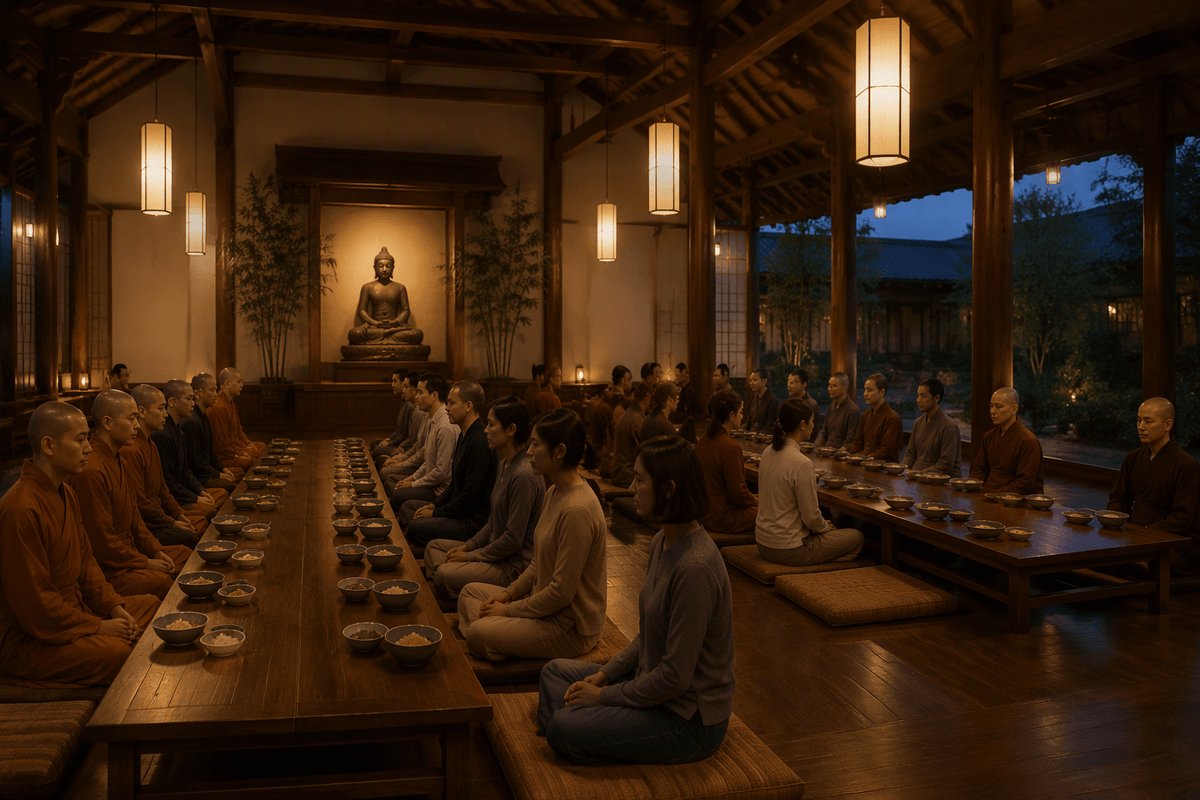
The first real “oh, I should pay attention” moment for me was dinner: it arrived quietly, already portioned, and nobody did the usual restaurant choreography of chatting and rearranging plates. Temple meals are simple on purpose (often vegetarian), and the rhythm matters as much as the food—waiting until the group begins, eating without leaving a mess, and returning dishes the way you were shown. It works well if you treat it like a short practice in mindfulness; it feels awkward if you’re hungry and tempted to speed-run it, because rushing is the one thing that really stands out.
Clothing is the easiest rule to follow and the easiest to underestimate. Most places give you a vest/pants set; wear it as-is, keep it clean, and avoid loud base layers (neon leggings, big logos) that turn you into a moving billboard in a quiet space. If you run cold, bring thin layers—temple rooms can be drafty at night—but skip anything overly revealing or tight, since sitting on floors and bowing makes “normal travel outfits” suddenly feel impractical.
Photography is where expectations vary, so assume “less is better” until you’re clearly told otherwise. Outdoor shots are usually fine; inside halls, ceremonies, and any moment involving chanting is often a no—even if no one scolds you. The most respectful move is to ask once at orientation, then keep your phone away during practice; you’ll remember more, and you won’t be the person whose shutter sound echoes in the silence.
Leaving respectfully: what to carry home
On the last morning, it’s tempting to leave quickly and “get back to the trip,” but departure is one of the moments where temples quietly notice you. Check your room the way you’d check a borrowed cabin: fold bedding the way you were shown, sweep up any grit you tracked in, and return your uniform exactly where they asked for it. It works best if you budget an extra ten minutes before breakfast; if you wait until the final call, you’ll feel rushed and loud in a space that’s trying to stay settled.
What you carry home isn’t usually a souvenir so much as a habit: moving a little slower at thresholds, keeping your voice low in shared corridors, eating without waste. If you want to donate, do it where the temple indicates (some prefer cash boxes; some have a small office), and don’t treat it like a tip for services rendered. A small bow at the gate or to the staff member who helped you is enough—more elaborate goodbyes can feel performative, especially if language is limited.