Why Clean Air Can Still Feel Irritating
The room looks spotless, yet your throat feels slightly dry when you walk back in. A faint tightness or urge to clear your airway can seem confusing, especially when there is no visible dust or smoke. “Clean air” usually describes what has been removed from surfaces or what the room smells like, not everything still suspended in the air. Sprays, fragrance ingredients, and tiny droplets may remain for a while, particularly in a small room with limited airflow.
That sensation does not prove that a particular product caused the change. Breathing responses can also shift with allergies, dry air, an existing respiratory sensitivity, or the effort of cleaning itself. Still, repeated exposure may make the pattern easier to notice, especially when several products are used close together. The product format, amount used, room size, and ventilation can all affect how much reaches the airways and how long the exposure lasts.
What Household Products Add To Indoor Air
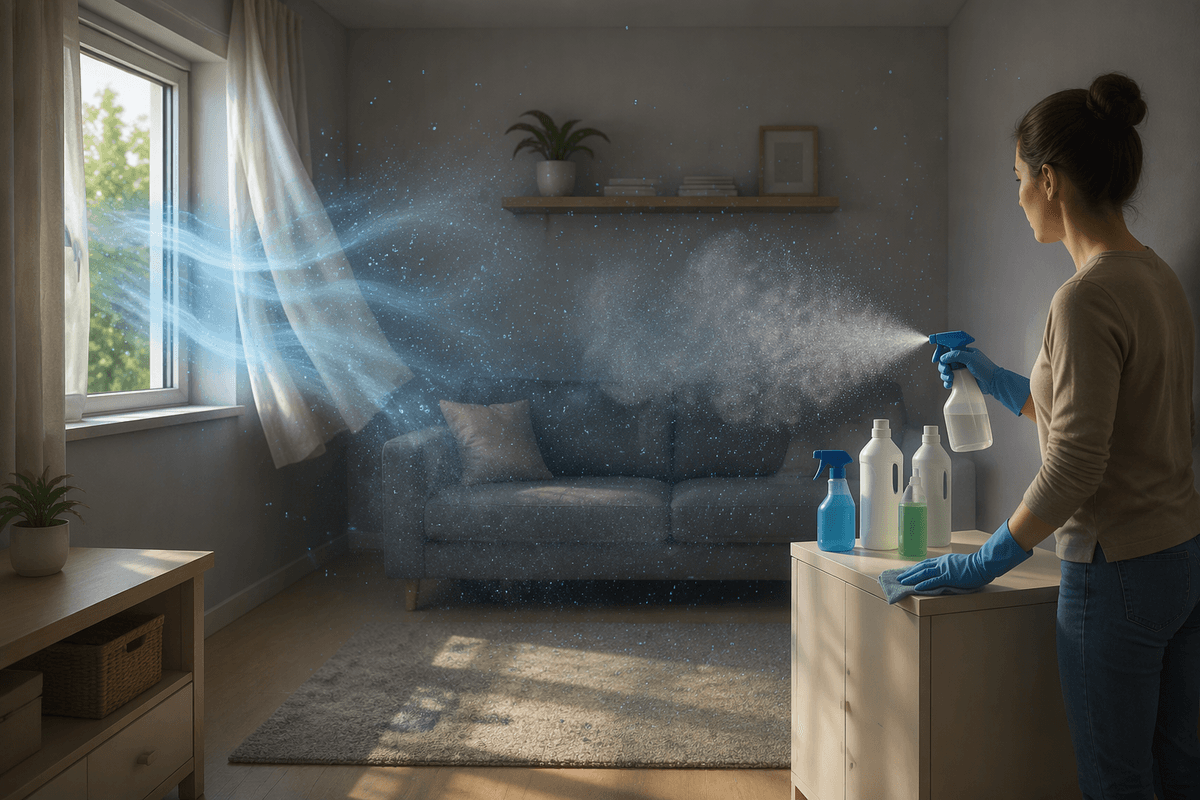
The sharp scent that lingers after cleaning is only one visible clue. Disinfectant sprays, glass cleaners, aerosol deodorizers, and scented products can release fine droplets or volatile chemicals into the room as they are applied. Some products add little airborne material when spread with a cloth, while sprays can create a wider cloud that is easier to breathe in, particularly near the face or in a bathroom with the door closed.
Air fresheners may also release fragrance compounds gradually, so exposure can continue after the original cleaning task is over. The amount in the air depends on how much product is used, how often it is applied, the size of the room, and whether fresh air is moving through it. A single brief exposure may pass without much notice, while repeated use can create a recurring background irritation. Smell alone is an imperfect guide, however: a strong fragrance does not always indicate greater airway exposure, and an odorless product may still affect sensitive airways in some situations.
How Irritation Can Change Breathing Responses
Sometimes the first sign is not dramatic: a deeper breath feels less comfortable, or you find yourself clearing your throat while finishing a cleaning task. Irritating particles and vapors can make the airways feel more reactive, leading to sensations such as coughing, chest discomfort, throat dryness, or a need to breathe more cautiously. In some situations, the breathing pattern itself changes briefly, with shorter breaths or more frequent pauses because the person is responding to the sensation.
Feeling tight or winded after using a spray does not by itself show that lung function has been permanently affected, and the effort of scrubbing, bending, or working in warm, humid air may contribute. The pattern becomes more informative when similar changes appear after the same type of product, in the same poorly ventilated room, or after repeated use. Even then, inconsistency matters: allergies, respiratory infections, dry air, and existing sensitivities can create similar sensations, making one episode difficult to interpret on its own.
Why Repeated Exposure May Feel More Noticeable
By the third or fourth cleaning session, the change may seem less like a surprise and more like a pattern. A mild cough, dry throat, or need to take a deeper breath can become easier to recognize when it appears after similar products or in the same enclosed space. This does not necessarily mean the airways are being steadily damaged. Repeated contact may simply keep irritation from fully settling, while familiarity makes small sensations more noticeable.
The routine itself can also create uneven exposure. Using a spray for several minutes, combining products, or cleaning with windows closed may produce a stronger concentration than the same product used briefly with airflow. On another day, the room may be larger, the amount smaller, or the task less strenuous, so the reaction may not appear at all. That inconsistency can be frustrating, but it is useful information rather than proof that the symptoms are imagined. If breathing changes repeatedly follow a particular product or setting, the pattern deserves attention without assuming that one cause explains every episode.
When A Reasonable Cleaning Habit Backfires
The cleaner is used with good intentions: one more spray on the counter, a second pass over the bathroom, or an air freshener added after everything is finished. Yet the routine can backfire when “more thorough” means more airborne product. A small room, closed door, and several applications may allow vapors or fine droplets to build while you are still working. The result may feel like a dry throat, cough, chest tightness, or a need to step outside, even though the surfaces look completely clean.
It is also easy to mistake persistence for effectiveness. A scent that remains for hours may create the impression of lasting freshness, while the airways continue receiving low-level exposure. Wiping rather than spraying, using less product, and allowing outdoor air to enter may reduce that lingering burden, although these changes are not always convenient or consistent. If symptoms appear mainly during or soon after a particular routine, the timing is worth noticing. It suggests a possible exposure pattern, but it does not establish that cleaning alone is responsible.
Ventilation Changes Exposure More Than Scent
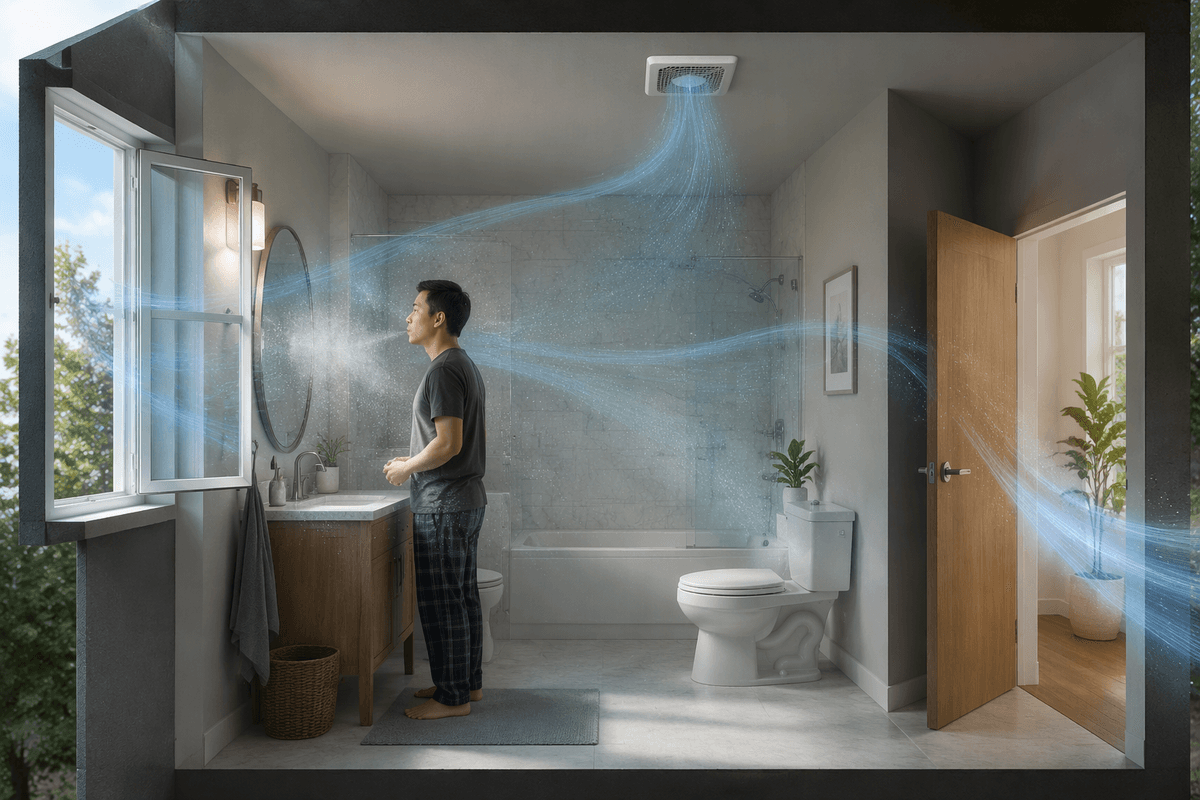
The room may smell less intense once a window is opened, but the more important change is often how quickly airborne material is diluted and removed. A bathroom fan, open door, or cross-breeze can shorten the time that vapors and fine droplets remain near the breathing zone. In contrast, a strong scent may fade or become familiar while the room still has limited air exchange. Odor can therefore be a poor measure of actual exposure, especially when fragrance ingredients are designed to linger.
Weather, building design, outdoor pollution, and the location of a fan can affect how well air moves, and opening a window may be impractical in cold, hot, or smoky conditions. Even with airflow, spraying near the face or using several products in a small space can create a brief concentrated exposure. Noticing whether breathing changes are less likely when air is moving may help clarify the routine, but it still cannot separate product effects from exertion, allergies, or other causes by itself.
Interpreting Symptoms Without Overlooking Other Causes
A cough that appears after cleaning may seem to point directly to the product, but the surrounding details matter. The same sensation can follow dust movement, vigorous scrubbing, dry indoor air, seasonal allergies, an infection, or the physical effort of working in a warm room. Timing helps, especially if symptoms begin during spraying, improve after leaving the space, and recur with similar products or conditions. Still, timing alone cannot prove cause, particularly when symptoms also occur on days without cleaning.
It can help to notice the product format, amount used, room ventilation, and how long the breathing change lasts, without treating every variation as evidence of lung damage. Ongoing, worsening, or disruptive symptoms deserve attention from a healthcare professional, especially if they occur at rest or with ordinary activity. A cleaning routine may be one contributing factor, but a broader pattern often gives a more reliable explanation than any single exposure.