Why Fasting Can Seem Helpful for IBS
By late morning, the stomach may feel quieter than usual, and the usual rush to the bathroom may not arrive. That change can make fasting seem like a simple answer for IBS. With fewer meals, the gut has less food volume to process, and there may be fewer immediate encounters with foods that tend to provoke bloating, urgency, or cramping. A slower, less interrupted routine can also make symptoms feel more manageable.
Still, the improvement may not come from fasting alone. It might reflect eating fewer total portions, avoiding a personal trigger, drinking less caffeine, or following a more consistent daily schedule. Some people also feel better because a shorter eating window reduces late-night meals, which can be uncomfortable when the digestive system is already sensitive. These changes often happen together, making the helpful factor hard to identify. If symptoms improve, the pattern is worth observing rather than automatically crediting fasting itself.
The Gut Patterns That Shape Fasting Responses
By the next meal, the difference may be less about hunger than movement. Eating usually signals the digestive tract to become more active, so changing the number and timing of meals can also change when cramping, gas, or bowel urgency appears. For someone whose IBS tends toward loose stools, fewer eating episodes may mean fewer noticeable periods of activity. For someone prone to constipation, however, long gaps may leave the day feeling slower, especially if fluid intake, fiber, or movement also changes.
The first meal after a fast can reveal another part of the pattern. A large portion, rapid eating, extra coffee, or a food avoided earlier may produce symptoms that seem like a reaction to fasting, even though the trigger is what follows it. Routine matters too: sleeping late, eating at unusual times, or delaying a bathroom visit can make bowel habits less predictable. These responses are often inconsistent, which makes a single comfortable or uncomfortable day difficult to interpret. The useful question is whether symptoms repeatedly follow the fasting period, the first meal, or the broader change in routine.
When Skipping Meals Creates New Discomfort
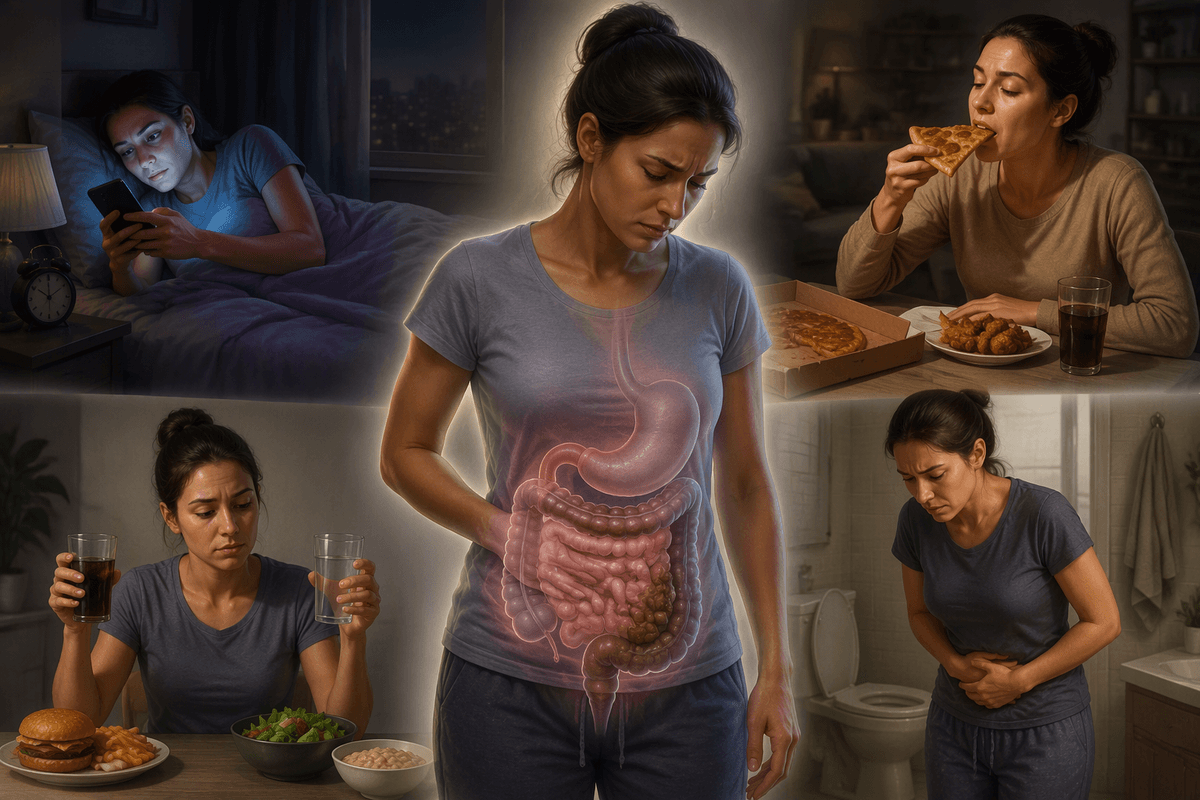
By midafternoon, an empty stomach can begin to feel less calming and more noticeable. Some people experience gurgling, burning, shakiness, or a vague sense of pressure when meals are delayed, even if bowel symptoms were quieter earlier. Hunger can also build into a larger meal than planned, increasing the chance of eating quickly or choosing richer foods. In that situation, the discomfort may be blamed on the fast, although the more immediate change was the amount, speed, or type of food eaten afterward.
Skipping meals may also disturb patterns that usually help the bowel stay predictable. A person who normally eats breakfast may lose a familiar morning bathroom opportunity, while someone with constipation may take in less fluid or fiber during the shortened eating period. Others may compensate with extra coffee, artificial sweeteners, or a late meal, creating gas or urgency later in the day. These effects are not always consistent, and one difficult episode does not establish a clear cause. Repeated timing can be more informative: discomfort that follows the empty period, the first meal, or the disrupted routine points to different explanations.
Short Fasts Versus Longer Restriction

After a short fast, the next meal may still resemble a normal part of the day. There is less time without food, and the body may have fewer adjustments to make when eating resumes. Even then, symptoms can depend on what fills the gap: a familiar meal eaten slowly may feel manageable, while a large or unusually rich meal may bring bloating, cramping, or urgency. The fast itself and the way it ends can be difficult to separate.
Longer restriction creates more opportunities for other changes to accumulate. Fluid intake may fall, fiber may become uneven, energy levels may dip, and meals may shift toward one substantial serving later in the day. Those changes can matter more for bowel regularity than the fasting period alone. Someone may feel temporarily lighter but then notice constipation, loose stools, or discomfort after repeated cycles. Longer fasting can also be harder to evaluate because sleep, activity, stress, and food choices often change alongside it. A brief, consistent pattern may therefore reveal more than an increasingly narrow eating window.
What Makes Fasting Riskier for Some People
A skipped meal may feel very different when the rest of the day is already unsettled. People with constipation-predominant symptoms may notice that less food, fluid, or fiber makes bowel movements harder to predict. Those who tend toward loose stools may react to the opposite pattern: a long gap followed by a large meal, strong coffee, or a high-fat food. Fasting can also be more difficult when sleep is poor, stress is high, or daily activity has changed, since these factors may influence gut movement at the same time.
Risk may also increase when fasting is used during a flare, when energy needs are higher, or when a person has another health condition affected by meal timing. Dizziness, weakness, nausea, or worsening abdominal discomfort should not be treated as signs that the fast is working. The several influences often overlap, so symptoms may be blamed on fasting when dehydration, food choice, stress, or an irregular routine is contributing. A pattern that repeatedly produces strain deserves more caution than one isolated uncomfortable day.
A More Predictable Way to Test Meal Timing
On a calmer week, the pattern may become easier to observe. Instead of changing several habits at once, keep meal timing fairly steady and adjust only one feature, such as moving breakfast later or narrowing the evening eating period. Note when meals occur, what was eaten, fluid intake, bowel movements, discomfort, and any unusual stress or sleep disruption. The record does not need to be detailed; its value comes from showing whether the same sequence appears more than once.
Consistency matters more than pushing the fasting period longer. A modest change repeated across several days may show whether symptoms follow the empty interval, the first meal, or a particular food. It may also reveal that regular portions and fewer late meals help more than prolonged restriction. Interpretation remains imperfect because IBS symptoms naturally vary, and tracking can become tiring or increase worry. If weakness, dizziness, worsening pain, or persistent bowel changes appear, the experiment should stop rather than become a test of endurance. Sometimes the clearest result is that a predictable routine feels better than a stricter eating window.
When IBS Symptoms Need More Than Fasting
When symptoms continue despite a steadier eating pattern, fasting may no longer explain the whole picture. Ongoing pain, repeated nighttime symptoms, blood in the stool, unexplained weight loss, fever, persistent vomiting, or a marked change in bowel habits deserves medical attention rather than a narrower eating window. Even without these warning signs, frequent urgency, constipation, diarrhea, or food avoidance can make daily life harder and may need a broader review of diet, medications, stress, hydration, and other health factors.
Fasting can sometimes reduce symptoms by reducing food volume or removing familiar triggers, but that relief may conceal an unresolved pattern. If eating becomes increasingly limited, energy falls, or symptoms return whenever normal meals resume, continuing to fast may add strain without clarifying the cause. A clinician or dietitian can help sort out whether meal timing is relevant and whether the routine remains nutritionally adequate. The useful endpoint is not enduring longer gaps, but finding a pattern that supports steadier digestion and daily life.