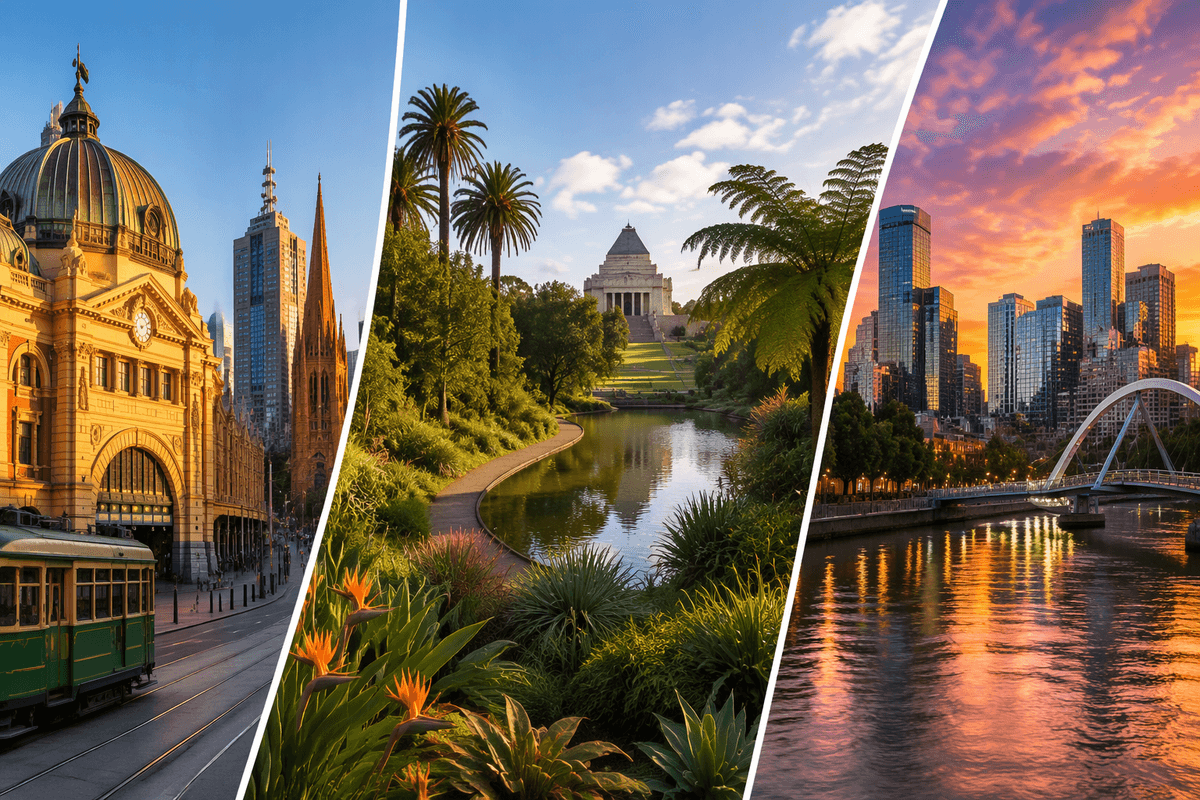
Why Melbourne Rewards Walking Explorers
On a first Melbourne morning, walking quickly reveals how close the city’s contrasts are: grand civic buildings, leafy gardens, laneways, and skyline viewpoints can fit into one plan without repeated transport fares.
The “nearby” does not always mean effortless. Hills, weather, park layouts, crowds, and opening hours shape the day, so the best routes balance scenery and distance rather than simply chasing the longest itinerary.
Best Architecture Routes Through Central Melbourne
Start at Flinders Street Station and follow Swanston Street north for Melbourne’s most efficient architecture sampler. Federation-era façades, St Paul’s Cathedral, the State Library, and Melbourne Central fit into roughly two hours with frequent cafés and tram stops when rain or tired legs intervene. The route is visually rich but busier around the station and Bourke Street, so it works best before late-morning shopping crowds build.
For a quieter extension, turn west toward Southern Cross Station and Docklands, where contemporary towers replace historic stonework. This adds distance without the same concentration of landmarks, and the exposed waterfront can feel bleak in wind or wet weather. A better compromise is the short Parliament House–Treasury Gardens loop: grand civic architecture with greenery and easy tram access. Choose it when you want contrast rather than maximum mileage, or when a full central-city circuit would leave too little energy for the gardens and viewpoints later.
Garden Walks For Slower, Greener Wandering
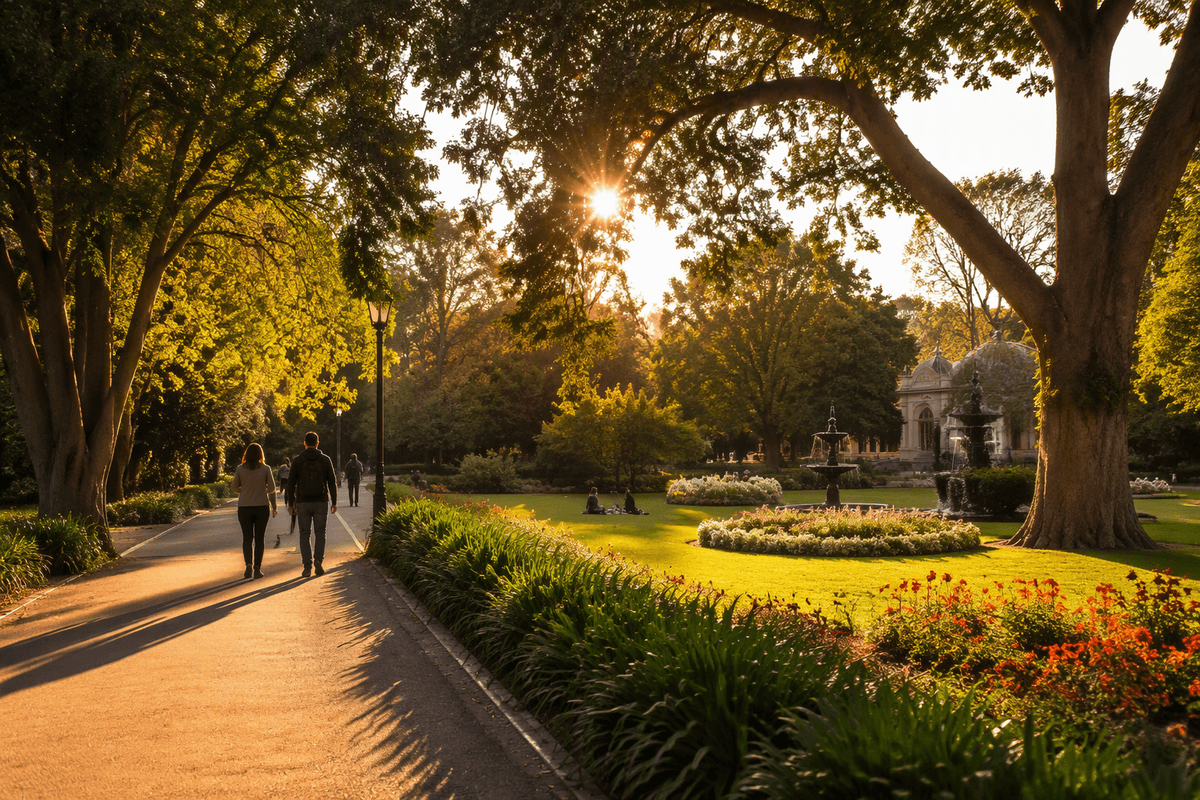
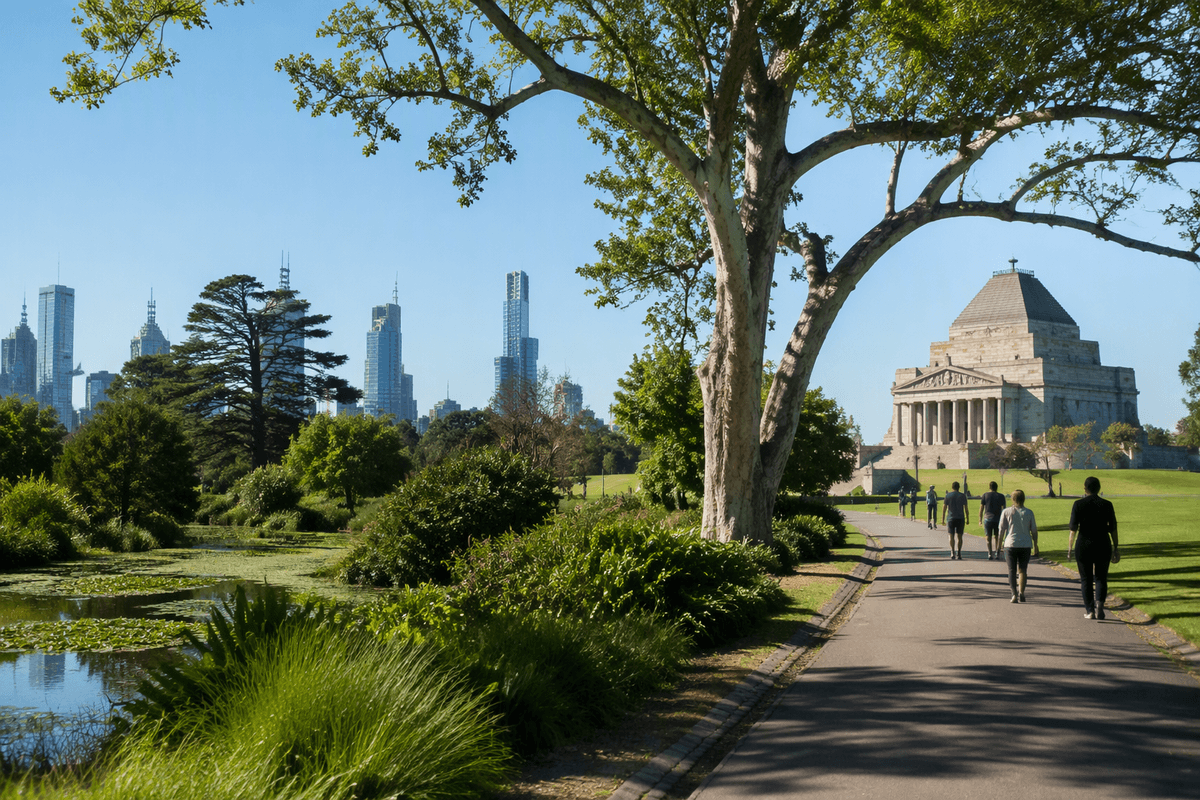
After the denser central-city route, the Royal Botanic Gardens offer a useful change of pace rather than another checklist. A loop from the Shrine of Remembrance through the lakes and Fern Gully takes around two hours, with benches and broad paths that make it easy to shorten the walk when heat or fatigue builds. The gardens are spacious but less convenient in sudden rain, and reaching every highlight can involve more distance than the map suggests.
For a more compact option, Fitzroy Gardens pairs landscaped paths with easy access from Parliament and the city centre. It is less immersive but better for a late-afternoon wander, especially when opening times or limited daylight rule out a longer garden visit.
Routes Delivering Melbourne’s Best City Views
For wide views of Melbourne’s skyline, follow the paths through the Royal Botanic Gardens toward the Shrine of Remembrance. The surrounding lawns and gardens make a pleasant starting point, with plenty of space to slow down before reaching the memorial. Climb the broad steps for an elevated panorama across the city, particularly appealing in the late afternoon when the changing light adds depth to the skyline. The viewpoint also offers a quieter alternative to paid observation decks, without requiring a separate ticket or a long journey across town. Allow time to explore the memorial grounds and enjoy the view rather than treating the stop as a quick photo opportunity. The route is relatively manageable, although exposed lawns and steps may feel uncomfortable in strong summer heat or wet weather. Sunset also attracts more visitors, so arriving slightly earlier may provide a more relaxed experience.
For a shorter route closer to the city center, head toward the Yarra River and cross to Southbank. The riverside promenade offers a different perspective, with the skyline reflected in the water and city lights becoming more noticeable as evening approaches. Its flatter paths make the walk easier, while nearby tram and train connections provide convenient options for continuing the journey or returning to your accommodation. Southbank also has plenty of restaurants, cafés, and public spaces, making it easy to combine the viewpoint with dinner or an evening stroll. However, riverside events, busy pedestrian areas, and diversions around popular venues may slow the walk, particularly on weekends.
Both routes offer memorable views, but each suits a different kind of outing. The Shrine of Remembrance provides a more elevated setting and a peaceful garden approach, while Southbank is better suited to travelers who prefer central access, riverside scenery, and nearby evening activities. Rather than squeezing every lookout into one walk, choose the viewpoint that best fits your schedule and leave enough time to enjoy the surroundings.
Choosing Routes By Time And Energy
With one flexible day, combine the central architecture route with Fitzroy Gardens: both are well connected, relatively compact, and easy to shorten if weather turns. Allow four to five hours including café stops, rather than treating every landmark as essential. The Royal Botanic Gardens and Shrine work better as a separate half-day, since their paths and open spaces add walking time even when distances look modest.
On a second day, pair the gardens with either the Shrine or Southbank, not both unless you are comfortable walking into the evening. Use trams to bridge gaps, especially after rain or heat, and keep one indoor alternative—such as the State Library or a gallery—for sudden weather changes. This leaves room for unplanned pauses without turning the itinerary into an endurance test.
Planning A More Memorable Melbourne Walk
Before setting out, mark one anchor stop, one café or indoor refuge, and a clear turning point. Check weather, opening hours, and sunset timing, then keep the route flexible enough to cut a loop rather than rush its final landmark.
The most memorable walk is rarely the longest. Choose the combination that leaves energy for an unplanned laneway, garden bench, or changing skyline—and treat trams as part of the plan, not a failure.